
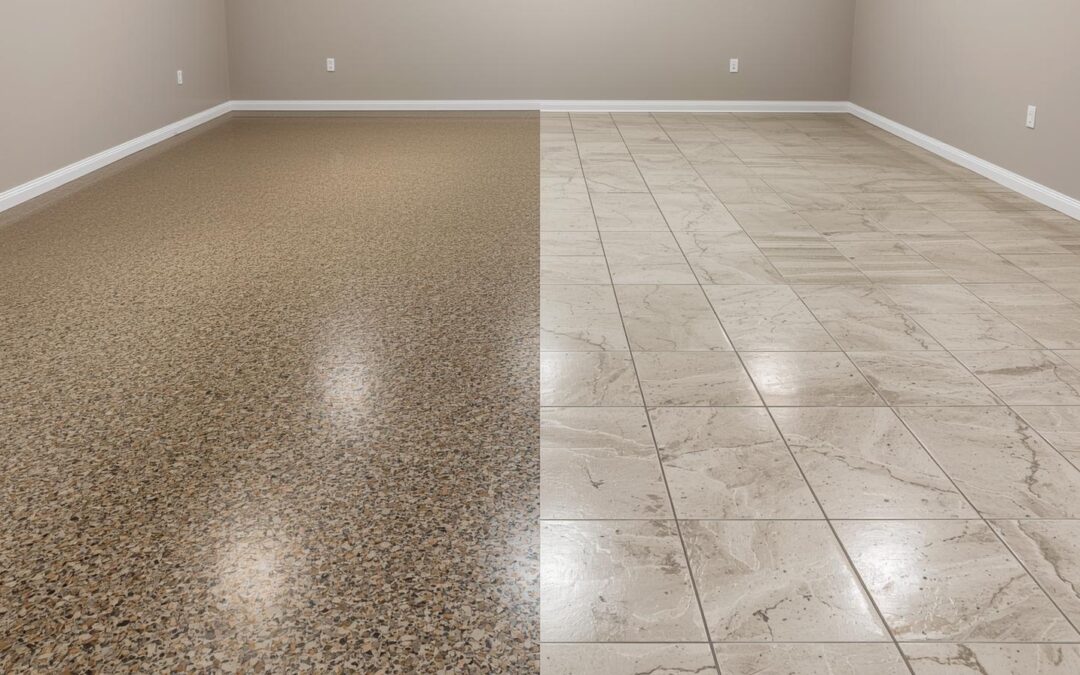
When it comes to choosing a durable, moisture-resistant flooring solution for basements in Pennsylvania, two options often come to the forefront: epoxy flooring and tile. Both have their strengths, but understanding the unique conditions of Pennsylvania basements—such as humidity, cold winters, and flood risks—can help you make an informed decision.
So, which is better for your basement: epoxy or tile?
Let’s dive into the pros, cons, and key considerations.
Why Basement Flooring Needs to Be Different
Basements in Pennsylvania face unique environmental challenges:
- Moisture and humidity from underground water tables
- Temperature swings that can lead to condensation and cracking
- Flooding risks, especially in older homes or areas with heavy rainfall
That’s why choosing the right basement floor coating is critical—not just for aesthetics, but also for protection, longevity, and ease of maintenance.
What Is Epoxy Flooring?
Epoxy flooring is a seamless, resin-based coating system applied over concrete. When cured, it creates a hard, durable surface that is both moisture- and chemical-resistant.
Benefits of Basement Epoxy:
- Waterproof and mold-resistant: Ideal for damp basements.
- Seamless surface: No grout lines, reducing dirt and mildew buildup.
- Customizable appearance: Choose from solid colors, metallics, or decorative flakes.
- Long lifespan: Professionally installed basement epoxy can last 10–20 years.
- Easy maintenance: A mop and mild cleaner are all you need.
“Epoxy coatings are ideal for basements because they resist moisture and stains while offering a sleek, modern look.” — National Association of Home Builders
What About Tile Flooring?
Tile, including ceramic, porcelain, and vinyl tile, is another common choice for basements due to its moisture resistance and variety of design options.
Benefits of Basement Tiles:
- Variety: Available in many colors, textures, and materials.
- Water-resistant: Especially porcelain or ceramic types.
- DIY-friendly: Easier for homeowners to install themselves than epoxy.
Downsides:
- Grout lines attract mold and dirt.
- Cold underfoot: Not ideal in Pennsylvania winters without radiant heating.
- Prone to cracking: Especially if the concrete slab shifts or settles.
- High maintenance: Grout cleaning and sealing are required over time.
Epoxy vs. Tile: Key Comparisons
| Feature | Epoxy Flooring | Tile Flooring |
| Moisture Resistance | Excellent (seamless) | Good, but grout lines are weak points |
| Durability | High impact and chemical resistance | Prone to chipping and cracking |
| Maintenance | Low (easy to clean) | Moderate to high (grout cleaning) |
| Installation Time | 1–2 days (professional) | 2–4 days (DIY or professional) |
| Aesthetics | Modern, customizable | Classic, varied |
| Comfort | Warmer feel with coating | Cold without heating systems |
Why Epoxy Flooring Is Better for Pennsylvania Basements
For Pittsburgh and surrounding areas, epoxy flooring has a clear advantage. The seamless application is resistant to flooding, mold, and cracking—common issues in older Pennsylvania homes. Plus, epoxy can be installed with moisture vapor barriers, offering an extra layer of protection not found in traditional tile systems.
“Epoxy coatings perform exceptionally well in basements, especially when moisture is a concern.” — Concrete Decor Magazine
Real-World Longevity: Epoxy’s Edge
In Pennsylvania’s four-season climate, epoxy basement flooring typically outlasts tile—especially in older homes where settling concrete slabs can crack rigid tile systems. When properly applied, epoxy can last up to 20 years with minimal maintenance.
Compare that to tile, where grout deterioration and shifting tiles can require repairs within 5–10 years.
Consider Epoxy for Basement Floor Coating in Pittsburgh, PA
At Z Worx Construction, we specialize in epoxy basement floors designed specifically for the Pittsburgh climate. Whether you’re renovating a damp basement or finishing a new space, our team will assess your needs and recommend the right basement floor coating to ensure long-lasting durability and style.
Final Verdict: Epoxy Wins in Most Cases
If you want a long-lasting, waterproof, low-maintenance solution that can handle Pennsylvania’s weather and basement conditions, epoxy flooring is the smart choice.
Tile has its place, especially for homeowners who prefer traditional aesthetics or want a quick DIY fix—but for performance, value, and protection, basement epoxy takes the lead.
Related Questions
Q: Is epoxy flooring good for basements?
A: Yes, epoxy is ideal for basements due to its waterproof and mold-resistant properties, making it great for humid or flood-prone areas.
Q: How long does basement epoxy flooring last?
A: Professionally installed epoxy floors in basements can last 10–20 years with minimal maintenance.
Q: Can epoxy be installed over old tile or uneven concrete?
A: Yes, with proper surface preparation and patching, epoxy can be applied over most surfaces including tile and damaged concrete.
Need Help Choosing the Right Basement Floor Coating?
Contact Z Worx Construction today for a free consultation on epoxy flooring in Pittsburgh, PA. We’ll help you protect your home with a solution that’s built to last.